Homologation Reactions: Reagents, Applications, and Mechanisms, 1st Edition
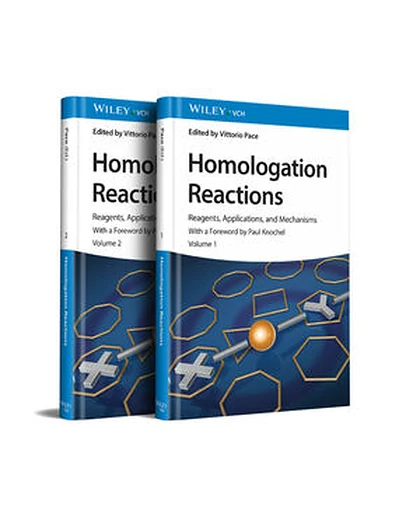
Homologation Reactions: Reagents, Applications, and Mechanisms, 1st Edition
Summary
Provides a unique summary of homologation strategies in organic synthesis Homologation Reactions presents different concepts underpinning the use of homologating reagents as well as their applications in organic synthesis. It covers in-depth discussions on the rationales governing this kind of transformations with a strong emphasis on mechanistic elements modulating critical aspects (e.g. selectivity) of the processes. In addition, this two-volume work features: Metal carbenoids, ylides, and diazo reagents Homologating agents working under nucleophilic, electrophilic, and radical regime Homologations realized on boron-containing or carbon-centered linchpins Use of highly sensitive fluorinated homologating agents Progressive homologations and the concept of assembly line synthesis Homologation processes followed by rearrangement cascades Construction of cyclic motifs and ring-