Molecular Spectroscopy of Oxide Catalyst Surfaces, 1st Edition
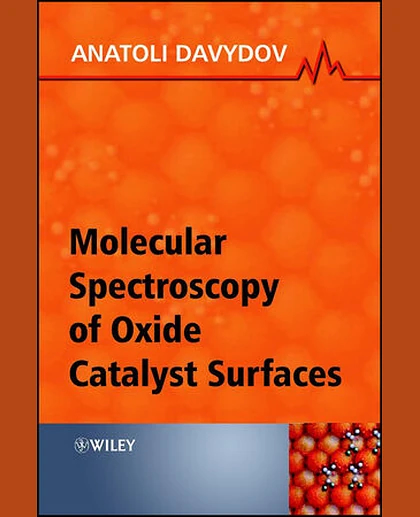
Molecular Spectroscopy of Oxide Catalyst Surfaces, 1st Edition
Summary
As in the study of transition metal complexes in solution, molecular spectroscopic methods - principally the infrared, ultraviolet/visible and electron spin resonance spectroscopies - have played key roles in establishing the concepts of coordination chemistry occurring at the surfaces of solids. This book describes the development of the principals of coordination chemistry of oxide surfaces using analyses of data obtained by these methods. The nature, properties, concentration of the surface adsorption centers and their influence on the character of interaction with different molecules are investigated. The book commences with an account of the basic theoretical principles and experimental techniques of the various spectroscopy methods, with special attention devoted to in situ measurements where the oxide or catalyst sample is in contact with the adsorbate or the reactant.