Relativistic Effects in Chemistry Part A: Theory and Techniques, 1st Edition
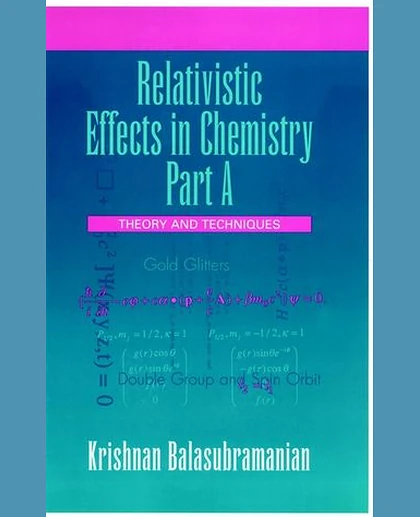
Relativistic Effects in Chemistry Part A: Theory and Techniques, 1st Edition
Summary
E = mc2 and the Periodic Table . . . RELATIVISTIC EFFECTS IN CHEMISTRY This century's most famous equation, Einstein's special theory of relativity, transformed our comprehension of the nature of time and matter. Today, making use of the theory in a relativistic analysis of heavy molecules, that is, computing the properties and nature of electrons, is the work of chemists intent on exploring the mysteries of minute particles. The first work of its kind, Relativistic Effects in Chemistry details the computational and analytical methods used in studying the relativistic effects in chemical bonding as well as the spectroscopic properties of molecules containing very heavy atoms. The first of two independent volumes, Part A: Theory and Techniques describes the basic techniques of relativistic quantum chemistry. Its systematic five-part format begins with a detailed exposition of