Seismic Reservoir Modeling: Theory, Examples, and Algorithms, 1st Edition
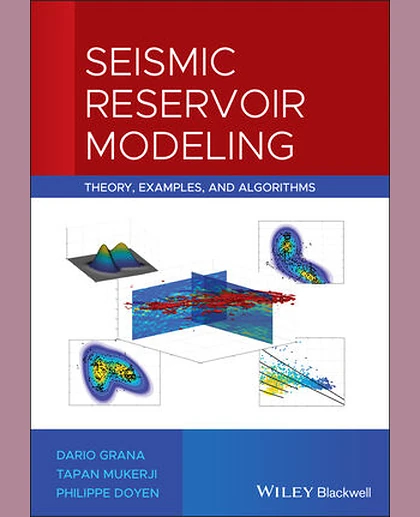
Seismic Reservoir Modeling: Theory, Examples, and Algorithms, 1st Edition
Summary
Seismic reservoir characterization aims to build 3-dimensional models of rock and fluid properties, including elastic and petrophysical variables, to describe and monitor the state of the subsurface for hydrocarbon exploration and production and for CO₂ sequestration. Rock physics modeling and seismic wave propagation theory provide a set of physical equations to predict the seismic response of subsurface rocks based on their elastic and petrophysical properties. However, the rock and fluid properties are generally unknown and surface geophysical measurements are often the only available data to constrain reservoir models far away from well control. Therefore, reservoir properties are generally estimated from geophysical data as a solution of an inverse problem, by combining rock physics and seismic models with inverse theory and geostatistical methods, in the context of the