Fast Facts for the Triage Nurse: An Orientation and Care Guide in a Nutshell
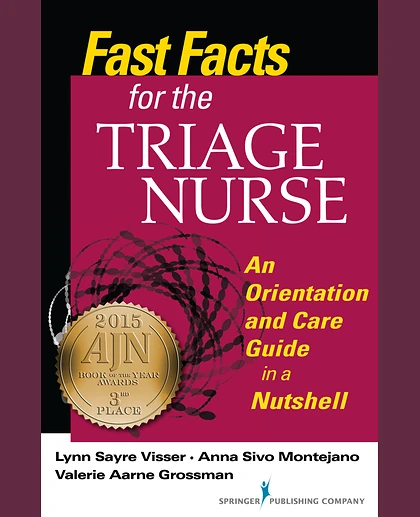
Fast Facts for the Triage Nurse: An Orientation and Care Guide in a Nutshell
Summary
This book provides new and seasoned nurses, preceptors, educators, and management teams with foundational skills that can be used throughout the triage orientation process as well as when practicing as an experienced triage nurse. It is divided into six parts. The main themes and objectives focus on numerous aspects of triage, from front-end processes and orientation to clinical practice and nursing essentials. Part I is devoted to setting the stage for success at triage with chapters providing tips for success and describing personal awareness for the triage nurse. The second part looks at the point-of-entry processes in triage nursing by explaining the role of the nurse, the purpose of a rapid assessment, and discussing customer service. Critical thinking is used every minute in triage as the nurse assesses patients upon their arrival. The nursing essentials are the topic of discussion in Part III. Chapters cover the various triage acuity scales such as Emergency Severity Index (ESI) and Canadian Triage and Acuity Scale (CTAS). Triage nurses play an important role with core measures, which are national initiatives used to drive quality patient care with the goal of achieving best patient outcomes. The fourth part discusses the trends impacting triage nursing including, the growing use of urgent care centers (UCCs) and electronic medical records (EMRs), and reviews key concepts about advanced triage protocols (ATPs). Part V deals with the “red flag” patient presentations such as respiratory, cardiac, neurological, abdominal, obstetric and gynecological, and psychiatric emergencies. The final part of the book discusses triage nursing for special populations including visually and hearing impaired patients and illiterate patients, as well as pediatric and geriatric triage nursing.