Proposal Writing for Clinical Nursing and DNP Projects, 2nd Edition
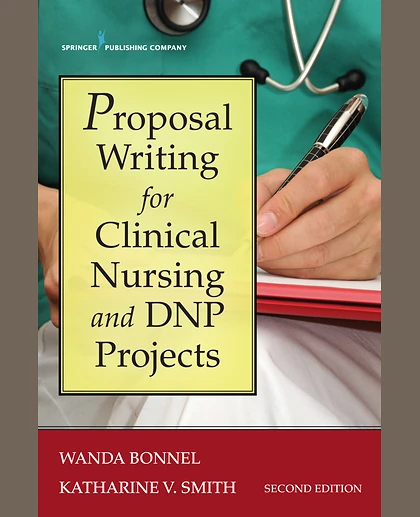
Proposal Writing for Clinical Nursing and DNP Projects, 2nd Edition
Summary
As new graduate programs evolve at schools across the country, diverse student cohorts have the opportunity to enhance their skill sets in planning and writing proposals. This book shares the "must know" for gaining a set of clinical scholarship tools for writing a concise, scholarly project proposal. It provides practical guides for graduate students and advanced clinicians to organize and package their clinical projects through tight proposals. A well-written clinical project proposal is a form of scholarly communication and is expected in advanced practice. The book guides the reader in using tools gained in previous courses, such as theory, research, and statistics, to develop a sound proposal for a quality advanced clinical project. It provides a toolkit of resources, including a project triangle framework, guidelines, and checklists to develop quality clinical project proposals. The book is divided into three sections. The first section includes an introduction to the topic and problem statement, and is important in making the case for and outlining a project. The second section considers key points of a scholarly methods section that flows from a purpose statement. The final section discusses the importance of visualizing the finished product, editing for concise, understandable language, and fine-tuning proposal methods and analyses. The book provides students with tools to implement in their scholarly practice. It focuses on quality improvement concepts, providing the opportunity to further address this common approach to clinical projects. The book features boxes offering advice from doctor of nursing practice (DNP) students who have completed project proposals and websites for further learning. It provides key features such as reflective questions, tips for making proposals complete and concise, exemplars, and reader activities. The book helps develop reflective clinical scholars who can write about clinical challenges, propose solutions, and use the methods of science to develop scholarly proposals.