Methods for Community Public Health Research: Integrated and Engaged Approaches
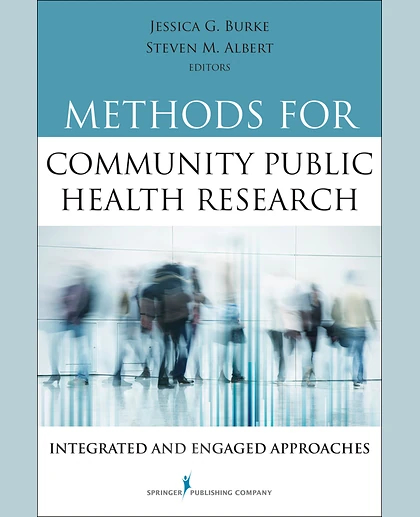
Methods for Community Public Health Research: Integrated and Engaged Approaches
Summary
This book introduces emerging research methods that will assist community health researchers interested in effectively addressing the complex health issues faced by communities today. It also introduces readers to several research methods particularly appropriate for addressing the context of health issues, translating research into action, and engaging community and relevant stakeholders. Use of these methods will lead to advancements in the field of community health and ultimately to improvements in community health. The book illustrates how community health researchers must move beyond the rigid distinction between qualitative and quantitative methods to adopt new integrated research methods to understand health as a community system. Within the discipline of public health, community health is an important and evolving subdiscipline that specifically emphasizes disease prevention and early intervention for members of a given community. The book includes spatial analysis, agent-based models, community-network analysis and realist reviews and addresses system dynamics, concept mapping, visual voices and media analysis. Integration of qualitative and quantitative data is key to generating unique insights into the mechanisms linking complex community health issues and to providing critical guidance regarding the pathways toward effective intervention and prevention. Institutional pilot funding, often available to researchers based at academic institutions, is a good option to garner support for innovative community health research projects. Partnering with other researchers and community members to learn and apply new and innovative research methods is a necessary steps toward more effectively addressing and improving the health of communities.