Mapping Innovation Management Systems: A Guide to ISO 56001 and Its Principles
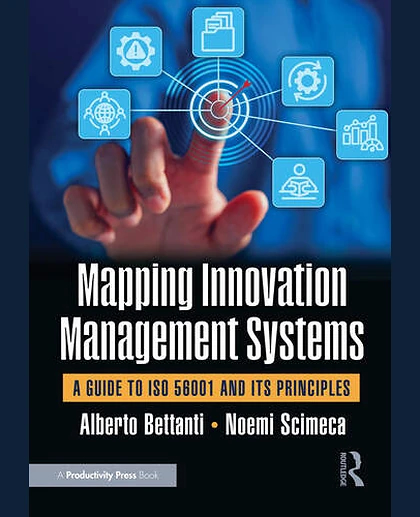
Mapping Innovation Management Systems: A Guide to ISO 56001 and Its Principles
Summary
In a time defined by accelerating complexity, where technological breakthroughs—from artificial intelligence to blockchain to the emerging contours of Industry 5.0—are rapidly reshaping economic and societal landscapes, the capacity to innovate is no longer optional. It is foundational. Yet innovation itself, while often romanticized as spontaneous or disruptive, demands structure, intent, and governance. It requires systems.
This book is a timely and relevant contribution to this evolving field. The publication of the International Organization for Standardization (ISO) 56001 standard in December 2024 marked a significant milestone: for the first time, organizations have access to a formal, certifiable framework dedicated specifically to innovation management systems (IMS). This book both contextualizes and operationalizes that framework.
Built around the eight core principles of the ISO 56000 series—ranging from leadership and strategy to value realization, adaptability, systems thinking, and collaboration—this volume translates abstract standards into practical, analytically grounded content. It does so through a structured progression across six chapters and a final annex. Each chapter builds on the ISO 56000 principles to examine not only the theoretical underpinnings of innovation management but also its practical manifestations in organizational life.
Drawing from established literature, standards, and real-world practice, this book provides a reliable foundation for anyone seeking to implement or deepen an innovation management system. It will be of particular value to three audiences: practitioners responsible for building innovation capability within their organizations, students eager to understand the logic and structure of innovation systems, and scholars seeking a coherent reference that bridges academic theory with normative frameworks.
In this sense, this book is not just a guide to ISO 56001. It is a comprehensive, well-informed resource for engaging with innovation management as a strategic discipline—one that is rigorous, relevant, and indispensable in the present era.