Progressive Corporate Governance for the 21st Century
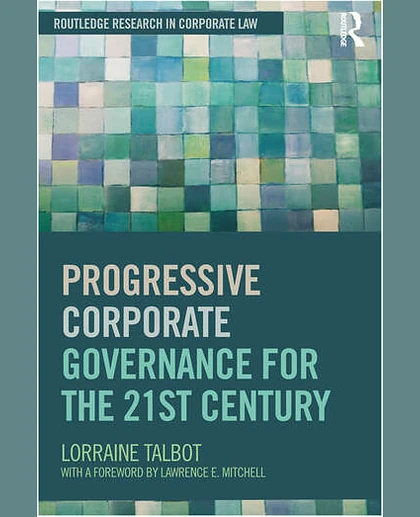
Progressive Corporate Governance for the 21st Century
Summary
Progressive Corporate Governance for the 21st Century is a wide ranging and ambitious study of why corporate governance is the shape that it is, and how it can be better. The book sets out the emergence of shareholder primacy orientated corporate governance using a study of historical developments in the United Kingdom and the United States. Talbot sees shareholder primacy as a political choice made by governments, not a ‘natural’ feature of the inevitable market. She describes the periods of progressive corporate governance which governments promoted in the middle of the 20th century using a close examination of the theories of the company which then prevailed. She critically examines the rise of neoliberal theories on the company and corporate governance and argues that they have had a negative and regressive impact on social and economic development. In examining contemporary corporate governance she shows how regulatory styles as informed and described by prevailing regulatory theories, enables neoliberal outcomes. She illustrates how United Kingdom-derived corporate governance codes have informed the corporate governance initiatives of European and global institutions. From this she argues that neoliberalism has re-entered ex command transition economies through those United Kingdom and OECD inspired corporate governance Codes over a decade after the earlier failed and destructive neoliberal prescriptions for transition had been rejected. Throughout, Talbot argues that shareholder primacy has socially regressive outcomes and firmly takes a stand against current initiatives to enhance shareholder voting in such issues as director remuneration. The book concludes with a series of proposals to recalibrate the power between those involved in company activity; shareholders, directors and employees so that the public company can begin to work for the public and not shareholders.