Excavations at a Templar Preceptory, South Witham, Lincolnshire 1965-67, 19th Edition
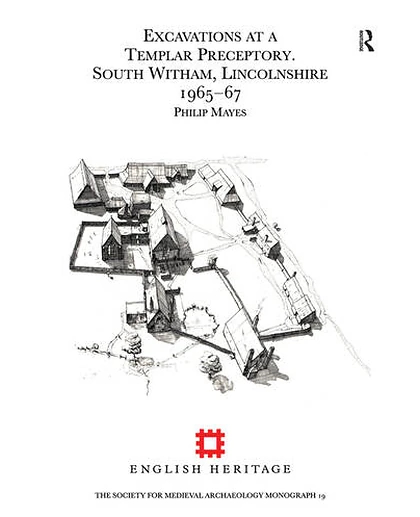
Excavations at a Templar Preceptory, South Witham, Lincolnshire 1965-67, 19th Edition
Summary
"The excavations at South Witham in Lincolnshire produced the most complete archaeological plan of the preceptory of the Military Orders so far seen in Britain. Before 1965 there had been only limited investigation of Knights Templar houses and evidence for day-to-day activities was almost non-existent. Never before had the different components of a preceptory been examined in detail using modern archaeological techniques. This monograph presents the final publication of results, beginning with separate chapters dedicated to the three main phases of occupation.Land in South Witham was first acquired by the Templars between 1137 and 1185 and thereafter a series of buildings was constructed throughout the late 12th and 13th centuries. The preceptory may already have been in decline before the final arrest and dissolution of the Order in the early 14th century. All the well-preserved buildings are described in detail by the excavation director, including the barns, blacksmith's forge, brewhouse, chapel, gateshouse, granaries, Great Hall, kitchen ranges, watermill and workshops.The text is enriched by many photomosaics and aerial photographs. This archaeological evidence then provides the basis for a well-illustrated discussion of architectural reconstructions by John Smith while the documentary background is summarised by Eileen Gooder. Among the finds discussed by a range of specialists are coins (Rigold), metalwork (Goodall), a prehistoric flat axe (Davey), objects of bone and antler (MacGregor), pottery (Johnson), architectural fragments (Gee) and painted wall plaster (Rouse). Environmental and industrial evidence are also considered, including animal bone (Harcourt), metal-working residues (Morgan) and human skeletal remains (Manchester)."