Embryology of Flowering Plants: Terminology and Concepts, Vol. 3: Reproductive Systems
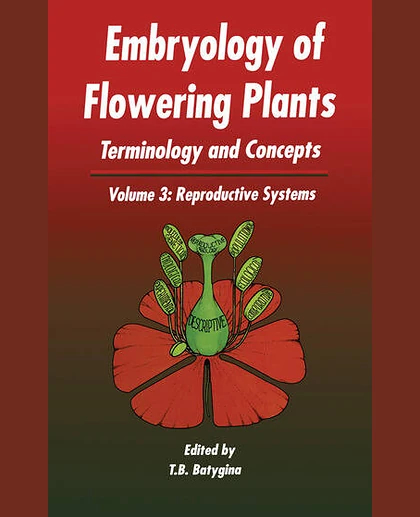
Embryology of Flowering Plants: Terminology and Concepts, Vol. 3: Reproductive Systems
Summary
Plant embryology, dealing with the regularities of initiation and the first stages of development of an organism, is now flourishing because of the overall progress being made in natural sciences. Such discoveries of the 20th century as production of plants from a single somatic cell, experimental haploidy, and parasexual hybridization were of general biological significance. The combined efforts of embryologists, geneticists and molecular biologists yielded the discovery of specific genes that control meiosis, egg cell development and early stages of embryogenesis. The tendency to synthesize data of embryology and genetics has become increasingly noticeable. It is connected with the fact that the majority of problems connected with morphogenesis, such as differentiation, specialization, the evaluation of features and the definition of the notionsgene and feature andgenotype and phenotype concern embryology and genetics (embryogenetics) in one way or another. Evolutionary embryology has given rise to a new approach to the study of problems of adaptation in plants. In connection with the problem of preserving biological diversity under conditions of ecological stress, special attention is paid to ecological embryology, revealing the critical periods in early ontogenesis and plasticity and tolerance of reproductive systems at the level of species and population. The study of variability of morphogenesis and phenotype in population (life cycle variations and the diversity of reproductive systems) is the most important point in the population embryology of plants.