Nonclinical Drug Administration: Formulations, Routes and Regimens for Solving Drug Delivery Problems in Animal Model Systems
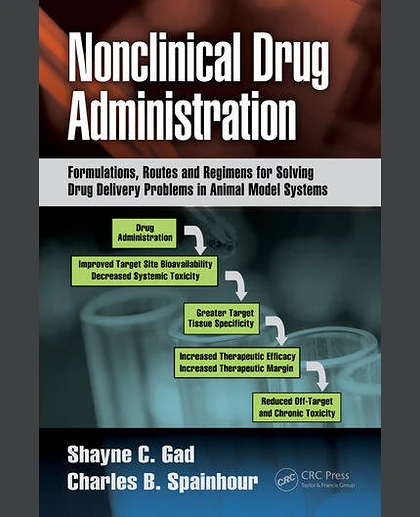
Nonclinical Drug Administration: Formulations, Routes and Regimens for Solving Drug Delivery Problems in Animal Model Systems
Summary
If we will ever achieve Paul Ehrlich’s "magic bullet," that is, a molecule which goes with high selectivity to the therapeutic target site, does what it needs to do, and is subsequently cleared from the body, the practice of safety assessment will have to change. Nonclinical Drug Administration: Formulations, Routes and Regimens for Solving Drug Delivery Problems in Animal Model Systems seeks to address a trio of objectives that, though separate, are linked and central to biomedical science and, ultimately, medicine. Rather seeing these as separate "silos," those working in nonclinical safety assessment will have to view these three in an integrated manner and to regularly and thoughtfully incorporate new information and technology.
The trio of objectives this book explores are: first, to present how to deliver more of a drug product systemically to facilitate the regulatory need for evaluating safety and efficacy in animal species (at elevated exposure levels) prior to advancing the drug to human testing; second is to achieve better tolerance to therapeutics administration in test animals and humans which achieves objectives 1 and 3; and third, to explore ways to improve on therapeutic target receptor delivery performance, therefore improving both clinical pharmacodynamics bioavailability and specificity.
The book’s ten chapters assemble the basic concepts, principles and hypotheses involved in quantitative receptor and chronological organism interaction dynamics central to the successful development of new therapeutics which depend on systemic administration to achieve desired therapeutic goals and in so doing avoid outcomes which limit, marginalize, or preclude the therapeutic use of so many molecules.