Computational Inorganic and Bioinorganic Chemistry, 1st Edition
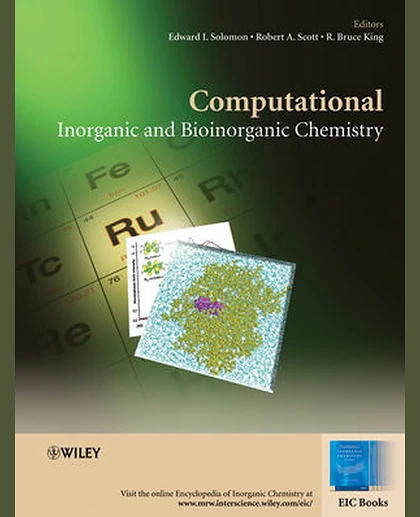
Computational Inorganic and Bioinorganic Chemistry, 1st Edition
Summary
Description Over the past several decades there have been major advances in our ability to computationally evaluate the electronic structure of inorganic molecules, particularly transition metal systems. This advancement is due to the Moore’s Law increase in computing power as well as the impact of density functional theory (DFT) and its implementation in commercial and freeware programs for quantum chemical calculations. Improved pure and hybrid density functionals are allowing DFT calculations with accuracy comparable to high-level Hartree-Fock treatments, and the results of these calculations can now be evaluated by experiment. When calculations are correlated to, and supported by, experimental data they can provide fundamental insight into electronic structure and its contributions to physical properties and chemical reactivity. This interplay continues to expand and contributes to b